
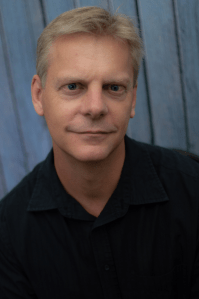
Could You Tell Us About Yourself?
I am someone who takes their passions to an extreme. In the early 2000s, I became interested in endurance sports and decided to complete an IRONMAN, cycle hundreds of miles in the mountains of Colorado, USA, and run a marathon in each of the fifty United States of America. I also decided to write a novel, of which I have completed seven and published three as of 2023. I love psychological and crime thrillers that make people feel and think. From an early age, I wanted to learn about computers and fiction writing. I almost enrolled in university to obtain an English major but chose to obtain a Bachelor of Science in computer science instead. Twenty years later, I returned and obtained a master’s in information systems. I live near Denver, Colorado, with my wife, two children, two Boston terriers, and two black-and-white cats with attitude.
What made you write your book (s)?
Writing is a cathartic exercise for me. When I read a book, I’m transported into another world, and time passes quickly. When I write, the experience sends me ten times further into another world, and the pains and pressures of reality completely vanish for a time. Though completely fictional, my books contain a large amount true information derived from experiences in my life so, for me, writing them is akin to journaling.
What is the first book you remember reading?
Black and Blue Magic by Zilpha Keatley Snyder. I will never forget pretending I had wings like the kid in this story.
What’s your favourite book?
Today, my favorite book is Fight Club by Chuck Palahniuk. The pure rawness of the writing and underlying theme conveyed through the actions of the characters always inspires me.
Who is your favourite author and why?
Well, I can’t likely play favorites with authors without hurting someone’s feelings, unless I choose someone who has passed away. So, my favorite dead author is Hemingway. His clear and super concise writing has heavily influenced me. Like him, I strive to build a big picture in the reader’s mind with as few words as possible.
How many hours a day do you write?
Some days I can only carve out an hour to write, but most days, I am able to put in three to four.
What one thing would you give up to become a better writer?
I’m not sure giving anything up would improve me as a writer. All experiences contribute to my writing in some way. As far as time goes, I’d like to spend more time writing, so that would mean taking time from something else, but there’s nothing left for me to give up. I spend time with family and friends, I exercise, I read, and with the rest of my time, I write.
What is the most difficult part of your artistic process?
Me. My artistic process is only as difficult as I choose to make it. Fortunately, I’ve never had a problem getting out of my own way and letting the words flow. Writer’s block is a foreign concept.
If you could spend a day with another popular author, whom would you choose and why?
Today, I’d say Riley Sager. I love the way his books make a fresh take on popular tropes, adding in multiple plot twists with great rising action. I love learning, and I could learn a lot from him.
What do you need in your writing space to help you stay focused?
A blank page. Then, a page with a paragraph on it. Then, a chapter, multiple chapters, and finally, the words “The End.” When I write, I don’t see anything in my writing space. I only see what’s happening in my writing.
What’s your favourite writing snack or drink?
Coffee, carrots, and peanut butter. I eat way too much peanut butter.
How do you celebrate when you finish your book?
This may sound depressing, but I don’t. Sally Field once said, “I am a cup with a crack in it. Each time my cup is filled with success, it slowly drains out of the crack until I’m empty inside.” When I finish a book, I move on to writing the next book, re-filling my cup.
Do you listen to music while you wrote your book (s)?
I have tried many times, but it doesn’t work for me. I love all kinds of music, and I play guitar. I often find myself analyzing songs, picking apart solos, chord progressions . . . it’s way too distracting. I write in a silent room.
Where do you get your idea (s) for your book (s)?
I don’t know. Many of my ideas come into my head in the first moments of wakefulness after a long nap. I’ll see some people in a situation that usually makes no sense. If I can hang onto the images long enough while I come out of sleep, they sometimes turn into concrete ideas for a book, or a scene, or a small beat. I keep a log of book ideas that came to me this way, and when it’s time to start a new book, I pick the one I think my readers would like most and go with it.
What is / was your writing process like?
I begin with a single sentence that describes the entire book. Then I break it into multiple sentences that describe the progression of events, and I meet the characters in those events. Back and forth, I spend time talking with the characters in my head and recording how they would react to the events. Eventually, the sentences grow into paragraphs, then chapters.
Do you try more to be original or rather give readers what they want?
Yes.
What kind of research do you do and how long do you spend researching before beginning a book?
Most of the research I do occurs during writing. I’m interested in learning all things, so I love it when a book takes a turn into an area of knowledge I’m not familiar with. Sometimes, the research is a quick answer to a question such as how do electronic doorknob locks work and can criminals exploit them. Other times, I’ll spend a few hours learning about the history of a geographical area, or a culture, or what it was like to be in Chicago in the early 1970s.
What’s your favourite and least favourite part of publishing your book (s)?
My favorite part is writing the back cover text. I enjoy creating an enticing door into each book, posing questions to entice readers. My least favorite part is worrying about something going wrong with the books’ availability online. I’ve never had an issue, but my mind always invents failure scenarios that don’t go away until the books are published.
How did you come up with the title for your book (s)?
I always have a “working title” while writing, and I come up with the actual title only after the book is completed. As of 2023, all of my books have single-word titles. I will lie down and meditate on everything that happens in a book until I hear one word that fits.
Which of the characters in your book (s) do you relate to the most and why?
I relate to those characters who’ve suffered and risen up from the ashes to better their lives.
What did you edit out of your book (s)?
I mostly edit the word “just” out of my books. My characters often just want to do things that just don’t always make sense. While I just want them to follow the plot I had in my head, they often just wander off, doing whatever they just want to do. They are usually right, so I will just edit the plot and let them go.
How long did it take for you to write a book?
I have written the first draft in less than two months for some books, longer for others. Subsequent drafts and editing add more time. From inception to “ready for publishing,” I have spent a maximum of two years on one book, and a minimum of eight months on another.
What do you hope your readers take away from your book(s)?
A heartfelt smile.
Did you get some negative feedback on your book? and if so how do you deal with that?
One of my first Amazon reviews said, “This book is so bad, it’s actually pretty good.” When the negative feedback is funny, I deal with it by laughing. When it’s constructive, it factors into my next book.
Where can people who are interested in your book, buy your book?
As of 2023, my books are available on Amazon, Barnes & Noble, Apple, Google Play, Spotify, Audible, Chirp, and tons of other places. To find out more about me and my books, you can visit my website
After writing your book (s) what is your advice to people who want to become writers?
Set aside some time every day to at least think about writing. Start with ten dedicated minutes, then let it grow. Begin using that time each day to write something. Start with a single sentence. Let it grow. The key is to do it every day. If you want to become a writer, the time you spend will grow, the sentences will multiply, every day. Eventually, you’ll wake up and find you’ve written an entire book. You become a writer by writing. There is no other way.
T.O. Paine Media Links
 The Book Corner Chronicles