
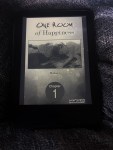
That day, she was abducted. But to her, that abduction was a ray of hope — the beginning of a new life. The girl promises to marry her abductor, and the abductor offers plenty of “happiness.” This is the story of an abductor and his victim… How could it be so warm?
This comic book is a gripping and thought-provoking that delves into dark and complex themes. At the same time this comic book sets the stage for a psychological exploration of freedom, captivity, and the blurred lines between right and wrong.
The story in this comic book revolves around Sachi, a young girl who has been kidnapped by her childhood friend, who believes he is rescuing her from an abusive home. The creators of this comic book skillfully create a narrative that challenges readers to question the nature of happiness and autonomy. The premise is unsettling yet compelling, that had drawn me personally into a morally ambiguous world where motivations and emotions are not what they seem.
The character development is a strong point in this comic book. Sachi is portrayed with depth and nuance, her internal struggles and conflicting emotions laid bare for picky readers as myself to empathize with. Her captor, while initially unsettling, is also given layers of complexity, making it difficult to categorize him as purely villainous. This ambiguity adds tension and intrigue, as I was compelled to explore the motivations driving each character.
The artwork in this comic book enhances the narrative, using expressive character designs and detailed backgrounds to create a rich, immersive atmosphere. The art style effectively conveys the emotional turmoil and tension that permeates the story. Subtle visual cues, such as the contrast between light and shadow, underscore the themes of captivity and freedom, adding an additional layer of depth to the storytelling.
The use of space and perspective in the illustrations is particularly noteworthy. The artwork in this comic book often uses tight, confined panels to evoke a sense of claustrophobia and entrapment, mirroring Sachi’s emotional state. This visual technique effectively draws readers into the psychological landscape of the characters, heightening the impact of the narrative.
While this comic book excels in many areas, there are moments where the pacing feels uneven. Some scenes linger longer than necessary, while others rush through crucial character developments. However, this is a minor issue that does not significantly detract from the overall impact of the story.
The dialogues in this comic book are sharp and evocative, capturing the complexity of the characters’ emotions and relationships. The writing in this comic book is both poignant and unsettling, using conversations to reveal the underlying tensions and motivations driving the plot. This nuanced approach to dialogue enhances the psychological depth of the narrative, making it a compelling read.
I Give This Book 4 / 5
 The Book Corner Chronicles