Emalie LivettMedia Links
Category: Interviews
Interview With Author Richard Audry


Could you tell us about yourself?
Nowadays I consider myself to strictly be a novelist. But over the course of my career, I’ve done all kinds of professional writing. I started out as an arts journalist and critic. For several years I was the editor of a weekly newspaper. From there I moved into trade journalism and copywriting for businesses. I was the promotional writer and occasional scriptwriter for a long-running PBS TV show, Newton’s Apple.
I roamed the U.S. as a travel writer. I covered consumer electronics for various publications. I had a book review column in the Minneapolis Star/Tribune for many years. I did medical writing for clients such as Mayo Clinic, and was on staff at a major med-tech firm. Throughout those years I picked away at writing novels; publishing a couple of mysteries through a vanity press. It’s only since 2012 that I’ve seriously applied myself as a novelist—producing three series and a solo mystery. That’s nine novels and two novellas. I’m currently working on two projects comprising four books—a fantasy trilogy and the fifth book in my historical mystery series. I write under my pen name Richard Audry and my real name D. R. Martin.
Can you tell us about your novels?
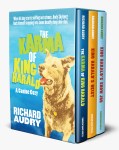
I have two mystery series and a ghost adventure series. My historical series—the Mary MacDougall Mysteries—revolves around a young heiress whose dream is to become a consulting detective. The period is the first years of the 20th century, the place Minnesota. The first two books were novellas and the last two novels. I’m working on a fifth book right now. My canine cozy series—the King Harald Mysteries—follows a recently divorced guy of about forty and his big, goofy pooch. The dog—who contributes his own POV to the stories—inadvertently involves his owner in various criminal cases. There are three novels in the series so far. Lastly, there’s my Johnny Graphic Adventures trilogy—a rip-roaring, steam-punky ghost adventure set in an alternative America of the 1930s.
What inspired you to write your books?
Ever since I was a kid, I loved to read. And I always thought it would be fun to create cool new stories out of thin air. It took me a while to actually do it; and a while longer to get good at it. I don’t make much money as a novelist, but by this point in my writing life, the money isn’t important. These days I write for the sheer pleasure of creating my own worlds and playing in them. Getting readers and making a few bucks is merely a bonus. I chose the genres I write in—cozy mystery, historical mystery, science fiction, fantasy—because these are things I enjoy reading and books that I’m confident I can pull off. There are other genres I also enjoy, but I don’t think I’d be good writing in them.
How many hours a day do you write?
I write on an old white Macbook. The battery lasts about two hours, so that’s usually the length of one of my writing sessions. And two hours a day is good enough, given that I face no particular deadlines. That’s typically 500 to 1000 words. I’m considering getting a new Macbook. I’ll be curious to see if longer battery duration inspires me to write more.
If you could spend a day with a popular author, whom would you choose and why?
At the top of my list would be Carl Hiaasen. There’s no one writing these days whom I enjoy more. His tales of gonzo humor and misbegotten criminality have always tickled me. I figure a day with him on some sunny Florida beach—lubricated by many fruity cocktails—would be a blast. I actually once had the great pleasure of spending a day with my then-fave author, Frank Herbert. I interviewed him for the newspaper I edited, we caught lunch, and ambled around in the rain for several hours. Then I saw him off to the airport in his taxi. It was every bit as great a time as you’d think it would be. What a brilliant, funny, thoughtful man. The encounter is written up in my little book, Four Science Fiction Masters (by D. R. Martin).
Who is your favourite author and why?
As a writer of crime fiction, I have special devotion to two mid-century masters. John D. MacDonald chronicled the dark and dangerous criminal corners and niches of American society, from the late-’40s through mid-’80s. He showed vividly how the lust for money and power and sex could so easily corrupt even good people. His protagonists and villains, even now, ring incredibly true. He’s best known for the 21-book Travis McGee series. McGee, a “salvage consultant,” helps folks get back the things that have been stolen from them—everything from money to reputation. His stuff can be a bit politically-incorrect, but it honestly reflects its era. Almost every other first-person gumshoe since then, starting with Spenser, owes a lot to McGee. My other favorite author is Georges Simenon, whose 80 Inspector Maigret mysteries do for France what MacDonald did for America. Austere, succinct, and moody, the typical Maigret tale is all about the ways people go wrong and how the inspector’s deep understanding of human psychology decodes their crimes. But those 80 Maigrets are only a fraction of his output; he wrote 320 other psychological novels.
How do you celebrate when you finish a book?
Nothing too elaborate. But I like to take my wife out to a fancy dinner—Italian is preferred—and toast the new title with a nice Merlot or Cabernet. And the toast is as much to celebrate her contributions as my own. She’s my number one editor, reader and critic, and adds immeasurably to each book. To her credit, she’s not the least afraid to tell me things I don’t want to hear; the kind of voice that’s invaluable to any novelist.
What’s your favourite writing snack or drink?
I don’t snack while I’m writing, but I like to have a cup of coffee or green tea close at hand. For a special treat, I’ll sometimes make a cappuccino run to the neighborhood coffee bar. Once in a while, I’ll set up shop there and work for a couple hours.
Where do you get the ideas for your books?
Each series arose differently. My Mary MacDougall Mysteries began with a viewing of the film A Room with a View, with Helena Bonham Carter as Lucy Honeychurch. We were watching the Sherlock Holmes series with Jeremy Brett about the same time, and I had an epiphany: Why not mash up Holmes with Lucy? From that came my heiress/sleuth Mary MacDougall. My King Harald Mysteries star a big, goofy Chesapeake retriever and his “boss” Andy Skyberg. Their story was inspired by my brother-in-law’s big, goofy Chesapeake retriever Gus.
What is your writing process like? And what’s the most difficult part?
Each book begins with some germ of an idea. For example, my most recent Mary MacDougall mystery, A Fatal Fondness, began with the image in my head of a drowned boy near the shore of a bay, found under the ice. Who was he? How did he end up there? Was it an accident or murder? How does Mary get involved? Then it gets complicated, growing from there, like tree branches spreading out. The thing that I find hardest is the plotting; the clockwork underlying the action and characters; the clockwork that makes the story go. And in addition to the main plot, there are two or three subplots. I’ve read many books on plotting and outlining, taken online courses, and so on. But for me the only thing that works is an arduous process of grinding it out over the course of many weeks—sometimes months. Usually, it takes a while before I arrive at something that works. It’s always painful, but comes with the territory. Generally, I end up bullet-pointing key events in the story. I need to get to this place…and this place…and this place…etc. What happens in between these waypoints is the fun part of writing; the improvisations that make a story come alive.
How do you develop your characters?
A few real humans and critters have inspired characters; but just a few. They’re mostly made up. So, I begin with types—that is, stock characters that we’re all familiar with. King Harald’s owner Andy is the decent guy who’s been emotionally and financially gutted by his recent divorce; so much so, that he retreats to his old home town. His twin sister—an ex-Silicon Valley type—is wealthy, smart, and an entrepreneur whose only speed is 100 mph. She gives him a job in her restaurant. Andy’s Aunt Bev is the energetic, well-meaning busybody who lands him in one fix after another. Andy’s BF is a crusty old boy named Thor Hofdahl who’s his sounding board on most everything; practically a sidekick. From those starting points, each character tells me who they are, and what they want to do. If I try to push them in a direction that’s untrue to them, they push back and let me know.
What’s your favourite and least favourite part of publishing your books?
The act of publishing an e-book is done at a great remove from anything notable. I’ve submitted my Word document and cover art to the Kindle system or Draft2Digital system (which distributes to multiple sellers), filled in all the required blanks, and clicked “Publish.” No fireworks go off, no confetti drops, no crowds cheer. In a day or two the book appears on sell pages. Not very exciting. A much bigger kick is getting the first paperback copies of the book. I can show it off proudly, send copies to reviewers, sell it on consignment at local bookstores. It’s quite a nice buzz, I can tell you—holding that book in your hand. But marketing and selling books among tens of thousands of competing books is a bear. Making a buck is exceedingly hard. It’s why most authors—both traditionally- and independently-published—only write a handful of books and then quit. Each book takes hundreds and hundreds of hours to write—and for some a couple thousand dollars out of pocket—and one would like a little reward for one’s hard work. Most authors don’t make much more than a buck an hour. Paid promotion, things like Book Bub, doesn’t work as well as it once did. Nor does social media. Getting professional reviewers to cover your book is hard. And most ordinary readers have become allergic to leaving online reviews. Even writing something as brief as “Loved it” or “Lotsa fun,” and clicking four or five stars, would be a big help. People can give a big boost to the authors they like by spending a minute or two leaving a brief, positive review. It definitely helps keep your favorite authors writing the books you love.
How did you come up with the titles for your books?
For my King Harald Mysteries, all that’s required is that the title include the pooch’s name and allude to something in the story. The Karma of King Harald…King Harald’s Heist…King Harald’s Snow Job. The first story involves a New Age retailer who happened to have been Andy’s old flame—thus “karma.” In Heist, Harald turns kleptomaniac. In the third book, Harald and Andy are snowed in by a blizzard during a bustling Christmas fair at a resort. Simple alliteration is the key to my Mary MacDougall titles—which, again, allude to plot elements. A Pretty Little Plot…The Stolen Star…A Daughter’s Doubt…A Fatal Fondness. I’m excited by the fifth book’s title; but I’m saving the reveal until closer to the publication date next year.
How do you deal with negative feedback?
I’ve gotten a few one-star reviews. Sometimes I’m thinking: “Did you even read the book?” Sometimes it’s nonsensical, a word salad. Other times the reviewer wanted plot beats that I didn’t want to write. They were expecting something trite and formulaic, and didn’t get it. For example, one person who gave my book a single star clearly didn’t like that I didn’t give Mary a happy-ever-after with her beau at the end of story. In fact, she gets her boyfriend’s leg broken, briefly ends up in jail, and the bad guy gets away. Not once has a one-star review shown me anything helpful.
Are you working on anything at the present you would like to share with your readers about?
I’m working on a fifth Mary MacDougall story that begins with the apparent accidental death of one of her father’s employees at the MacDougall summer house. But Mary sets out to prove that his brutal and bloody demise was no accident—which ultimately leads her to some deep, dark secrets involving an infamous figure in American history. I’m also returning to the first, unpublished novel I wrote back in the ’80s, a big fantasy-adventure; and turning it into a trilogy. That will be written under my real name, D. R. Martin.
After writing your books, what’s your advice to people who want to become authors?
First, quit talking about writing and thinking about writing and reading about writing. Just write! Put down as many words as you can as quickly as you can. Short stories, novelettes, novellas, even novels. They’ll probably be bad at first, but you’ll be learning and improving. After a few hundred thousand words you’ll probably get decent at it. Whatever you do, don’t get addicted to one precious book. Because of all the time and effort it takes, it’s tempting to linger and revise, revise, revise and try to achieve perfection. “I’ve put so much into this book and I must make it perfect no matter how many years it takes.” NO NO NO NO! Move on to the next project and the next and the next. The perfect, as they say, is the enemy of the good. If you’re writing a series—mystery or sci-fi or whatever—you’ll need to get a dozen or more books out to really build an audience. And that’s the easy part. Marketing and selling your books is a whole other career that’s even harder. And I’m not the person to advise there—I stink at it. Another very important thing to be prepared for is rejection. You will be rejected a lot if you go the agent/publisher route. Develop thick skin and never stop believing in your work. If you’re rejected enough, you may want to consider independent publishing through Kindle and other services. You’ll go around the gatekeepers and get your work out in the world. It puts you entirely in charge of your literary fate, with all the responsibility, cost, and labor that involves. It’s not easy, but it may be your only option. I would advise against vanity publishers; but if you can afford it, go for it.
Where can people who are interested in your books buy them?
The e-books are available from the usual suspects. Amazon, Barnes & Noble, Kobo, etc. Just click below. Readers might also check out the e-book lending program at their local library. Some of my e-books are available at libraries around the U.S. Print-on-demand paperbacks can be ordered through Amazon or Barnes & Noble, or from any bookseller who has access to POD titles. Here’s a link to my Richard Audry page on Amazon. To check out my books at Barnes & Noble click here. Or click here to get the books from Kobo.
Richard Audry Media Links
Interview With Author Dr. Barry Nadel

Could You Tell Us About Yourself ?
Grew up in a Jewish religious home in San Jose, California.
BSc in Viticulture and Enology from UC Davis 1975.
MSc in Viticulture and Enology on Haploidy and Plant Tissue Culture from UC Davis 1975-1977.
Immigrated to Israel Aug. 1, 1977.
PhD in plant genetics from the Hebrew University of Jerusalem at the Faculty of Agriculture in Rehovot, using plant tissue culture as a tool for selection for resistance to Mal Secco in Lemon.
Researcher at the Faculty of Agriculture, Dept. of Horticulture. The use of plant tissue culture for mass reproduction and plant physiology.1985-1991.
CEO and Chief Scientist of Agecotec Ltd. 1991-2011. Breeding maize, squash, melon, watermelon, facus, tomato, and pepper (hot and sweet).
Contract research for startup domesticating an important wild plant that had been harvested to a point of extinction. The plant is an important source of an anti-cancer drug, 2011-2012
In 2013-15 worked for Breath of Life Ltd. a government-sanctioned medicinal Cannabis grower first as the chief agronomist and then as the chief scientist.
2015-to present agricultural consultant and author.
Both divorced and widower. Four children and eleven grandchildren.
What made you write your book (s)?
The need to express ideas through stories. I wrote originally for myself. However, after 25 years, I realized the material was too important to keep to myself.
What is the first book you remember reading? First grade reader in 1959. See Spot. See Spot run. Run, run, run.
What’s your favorite book?
Old Testament
Who is your favorite author and why?
Isaac Asimov, because he was decades before his time, besides being a excellent writer.
How many hours a day do you write?
Three to four.
What one thing would you give up to become a better writer?
My sorrows.
What is the most difficult part of your artistic process?
Marketing
If you could spend a day with another popular author, whom would you choose and why?
Sarah Maas, because she is a fantastic storyteller.
What do you need in your writing space to help you stay focused?
Music.
What’s your favourite writing snack or drink?
None.
How do you celebrate when you finish your book?
By starting the next.
Do you listen to music while you wrote your book (s) ?
Yes
Where do you get your idea (s) for your book (s)
My imagination.
What is / was your writing process like?
I have a general idea and the words flow out of the end of my fingers onto the keyboard.
Do you try more to be original or rather give readers what they want?
Original.
How did publishing your (first) book ?
All 21 and soon 22 books are self-published.
What kind of research do you do and how long do you spend researching before beginning a book ?
My research occurs during the writing of the book. All my scientific facts are backed up by articles that are peer-reviewed. In my novels, it is the same and material of Jewish law I depend on numerous scholars and rabbis.
How do you develop your plot and characters?
My characters are developed through their dialogues with other characters.
What’s your favourite and least favourite part of publishing your book (s) ?
Editing, which takes as much or more time as writing.
What part of the book was the most fun to write?
When I add my personal opinions and outlooks on life.
How did you come up with the title for your book (s) ?
Lots of hard work based on the story.
Would you and your main character get along?
Absolutely, Daniel Arieli is a kind, thoughtful, giving man dedicated to living a moral life.
If you could meet your characters, what would you say to them?
Hi old friend. Great to meet you at last.
Which of the characters in your book (s) do you relate to the most and why?
I relate to almost all the protagonists. They are people of high moral standards and dedicated to serving their people.
What is a significant way your book has changed since the first draft?
I had to change the name of my last book from anointed in sorrow, to Crown in Sorrow, because of Jewish law. On the first king of a dynasty is anointed with oil. Daniel Arieli is the fourth in his line.
How would you describe your book’s ideal reader?
A person who cares about morality, enjoys a great story, enjoys learning and cares about people.
What did you edit out of your book (s) ?
All profanity and explicit sex.
What was your hardest scene to write?
In book 9 Forged in Fire, I made my beta reader cry. The scene is after escaping a burning bungalow. The Free Thinker’s Malogoth assassins try to murder King Yona Arieli’s children. The youngest, Sarah’s clothes catch on fire as she escapes the building. Her brother, Daniel tackles her to put out the flames, but too late. He cradles her in his arms and takes her pain, replacing it with his inner serenity. She dies burned to death with a smile on her face.
How long did it take for you to write a book ?
Since I had been writing for years, I use that material as the basis of the series. Book 15 only needs a book cover and I am working on book 16. It can take 4-7 months to write, edit, edit, edit and publish.
What do you hope your readers take away from your book (s) ?
To live a more moral and ethical life. To follow the example of the Light of Justice.
What was the hardest part of writing your book (s) ?
The emotional parts. I need a box of tissues next to me as I write.
Did you get some negative feedback on your book ? and if so how do you deal with that ?
The vast majority of negative feedback comes from people who don’t believe in God. They are incapable of looking beyond and judging the book on its literary laurels.
Where can people who are interested in your book, buy your book ?
On Amazon, look up Barry Nadel or the Hoshiyan Chronicles or on my website
Dr. Barry Nadel Media Links
Interview With Author Chad Wannamaker


Could You Tell Us About Yourself ?
My name is Chad and I like to write in the genres of sci-fi, horror, and thriller. I graduated from Virginia Commonwealth University and hold a Masters of Clinical Psychology from Mercer University. My hobbies include football, martial arts and hiking. I’ve been writing my entire adult life, but just recently decided to publish my stories.
What made you write your book (s) ?
My imagination is the best answer I can give. I have always had a vivid imagination, and I realized that storytelling through my writing was a lot of fun. I always enjoy creating, but recently I decided to finish some of them and publish.
What is the first book you remember reading ?
Where the red fern grows. It is the first I can remember that was substantial for my age around 4 or 5.
What’s your favourite book ?
Jack Reacher the Killing Floor. It is the first book in the series and by far my favorite. I really enjoyed the 6th book as well.
Who is your favourite author and why?
Lee Child is my favorite. I love the way that he is able to incorporate the action and building the scene at the same time. Not all authors do that. It feels like watching a movie every time I read the books.
How many hours a day do you write?
It varies on the week. I have a fulltime job as well. Generally, I will sit and write for word count. My goal everytime I sit to write is 1500 – 3000 words. I write in different genres, so the amount of time for each session varies. The easiest for me to write is romance/erotic material followed by horror. I can get 3000 words in about 3 or 4 hours.
What one thing would you give up to become a better writer?
Honestly, I would give up my day job. I love what I do, but to be able to write for a living is a dream of mine.
What is the most difficult part of your artistic process?
The most difficult part is creating the worlds in my books. I use a lot of realistic elements, and I have to do lots of research to make sure I’m getting it right.
If you could spend a day with another popular author, whom would you choose and why ?
Probably Stephen King. I would love to sit with him and just get into his head about how he does so many different types of stories. He intrigues me because I like to write many different stories.
Where do you get your idea (s) for your book (s) ?
Most of them just come to me a while I’m driving, or sometimes a while I’m at work. I just wrote a 300 word synopsis for a story at work based on some real events. I heard people talking about it at lunch and something just clicked. Also, I get the ideas from my dreams.
What is / was your writing process like?
My process is pretty simple, I will play some jazz or hip hop music in the background with the TV on muted and just write. I usually have a beer or cocktail beside me.
Do you try more to be original or rather give readers what they want?
This is a great question. I personally try to be original and true to myself. I have had some people request things or had some reviews of my work make suggestions. But, at the end of the day, I write for the enjoyment of making stories. If people decide to buy and read those then that’s a win for me as well.
How did publishing your (first) book ?
Publishing my first book was a disaster. I had no idea what I was doing, and the finished product was less than ideal. People still enjoyed the story, but honestly, I don’t like how it turned out. Eventually, I’m going to redo the series.
What kind of research do you do and how long do you spend researching before beginning a book?
My fantasy and horror books get the most research. Well fantasy/sci-fi. I try and incorporate real elements into the stories so some of the research takes months. Like if I do a story about the ocean or in space I research those elements. I was going to do a story about a cruise ship, and I actually made an appointment with a retired captain to get the characters correct. One of my favorite movies, Die Hard with a Vengeance, was so realistic that the writes got a visit from the FBI. That is the kind of realism I’m going for.
How do you develop your plot and characters?
The plot takes me a while. I usually just write what I want to happen and the ending first. Then I fill in the rest. The characters are pretty easy for me to develop. Honestly with most of them I just start writing and remember where I was going for each character.
What’s your favourite and least favourite part of publishing your book (s) ?
The favorite is the finished product (not my first book). It’s also nice when people buy the book and love it. I think I’m my worst critic. The least favorite is marketing. I have self and traditional published, and if you aren’t a large name, you have to market yourself in both instances.
What do you need in your writing space to help you stay focused?
I need my computer, monitor, some music and a TV. Then a few beers. Interestingly, I will write with pen and paper sometimes, then transfer it to the computer.
What’s your favourite writing snack or drink?
Munchies and Coors lite
How do you celebrate when you finish your book?
I usually go out with my friends for some wings, darts, and bowling.
Do you listen to music while you wrote your book (s) ?
Yes, jazz and hip hop.
What part of the book was the most fun to write? How did you come up with the title for your book (s) ?
Good question. I don’t remember how I came up with the name.
Normally, I just write the book and at some point the name comes to me.
Would you and your main character get along?
In many of my books I think that we would get along.
If you could meet your characters, what would you say to them?
I would laugh and tell them to stop being so crazy.
Which of the characters in your book (s) do you relate to the most and why?
I would say that Jack in my new book. He is the calmer leader of the group and tries to be understanding. He likes to protect people, and he is focused on helping people.
What is a significant way your book has changed since the first draft?
My first book went from being on Mars to another galaxy completely.
How would you describe your book’s ideal reader?
For me, I don’t like to hold back when I write, so an adult reader is my ideal.
What did you edit out of your book (s) ?
Nothing. I generally don’t edit out portions of my books. It may make some people uncomfortable, but I have to be true to the story.
What was your hardest scene to write?
I can’t say right now because it’s in the sequel to this book.
How long did it take for you to write a book ?
The shortest was 3 weeks. The longest was 3 years.
What do you hope your readers take away from your book (s) ?
I just want to entertain. Daily life is so difficult, that I hope someone can sit down with my book and just relax into the worlds I create.
Did you get some negative feedback on your book ? and if so how do you deal with that ?
I have. My type of storytelling can be a little offensive to some readers, but that is life. My thing is, if you don’t like it don’t read that part. But don’t let that stop you from enjoying the story.
How did you feel when you first published your book (s) ? Scared ? Excited ? Nervous?
All of the above. Seriously, I was scared that I was doing it wrong, excited that my story was out there, and then nervous that people would hate it. I thought about removing my book from circulation when I got my first bad review. It is a very vulnerable place to be in the process.
Where can people who are interested in your book, buy your book ?
My books are available through all sites, Amazon, B&N, Apple, Kobo, etc. The easiest way to find them all is to use my website, http://www.chadwbooks.com, and fill out the contact form. I keep in contact with a newsletter. The other is to follow me on Amazon, just search for Chad Wannamaker.
Are you working on anything at the present you would like to share with your readers?
Currently, I’m working on 3 books. One is a story about the love of family, more of a dramatic type of story. Second, is the follow up to my new book Obsidian Tomorrow:The Storm. Finally, for adults only is a steamy story about a young woman that falls in love with her dad’s friend (based on true events).
After writing your book (s) what is your advice to people who want to become writers?
Just start and keep writing. Don’t worry about word or time goals when you write. Just focus on telling a complete story. Even if you only write 3 words in a day, that is a good day.
What are common traps for aspiring writers and have you faced any of them ?
I did not fall into the trap, but look out for vanity publishing. As a writer the idea of being published traditionally can cloud judgement. If a situation seems too good to be true, it probably is in this industry. There are lots of people that pray on those aspirations.
Do you read your book reviews? How do you deal with bad or good ones?
I read all my reviews. With the good ones it makes me feel happy and proud that someone is enjoying my work. With the bad, I first focus on if it’s a legitimate critique, then I decide if that makes the story better or worse. I tend to ignore the feelings of the comment and focus on if it will make the story better. Honestly, if I feel that it would harm the work, I ignore it. I love that people read and enjoy my work, but if you don’t like it then don’t read it. I will always write to tell the best story.
Is it something more you want to tell us which I forgot to ask about?
Just go out and grab a copy of my new book! Thank you .
Chad Wannamaker Media Links
Interview With Author Sarah F. Noel


Could You Tell Us About Yourself
My name is Sarah F. Noel, and I’m the author of the Tabitha & Wolf Historical Mystery series. I’m originally from London, but I now live in Grenada, in the Caribbean.
What made you write your book (s) ?
The idea for this book had been rolling around in my head for some time. At the end of last year I was in between jobs, and so just decided finally to sit down and start writing. And then, when I was done with the first book, I found I wasn’t done with the characters. Now, I’m about to start working on book 4!
What’s your favourite book?
Pride and Prejudice by Jane Austen. It’s just sublime.
How many hours a day do you write?
I’m an early riser, so I try to get an hour or two in each morning before I start my day job. At the weekends, I will often write for 8 hours straight.
What is the most difficult part of your artistic process?
It’s important to me that my mysteries make sense; there’s nothing I hate more than when an author makes a huge leap in logic in order to wrap things up. It takes a lot of thought to work through all the possible strands of a story and the motivations of all the characters in order to make sure that it all ties together as logically as possible.
How do you celebrate when you finish your book?
Most of the time, I start the next one!
Where do you get your idea (s) for your book (s)?
Before I wrote historical mysteries, I was an avid reader of the genre. I thought a lot about what I most liked in the books I enjoyed and what most annoyed me. The 19th century was a time of such upheaval in Great Britain; social, technological, and political. I felt that many of the books I read didn’t immerse themselves in enough of these issues (of course, some do). I wanted to have my characters respond to the changes they’re seeing and experiencing around them.
Do you try more to be original or rather give readers what they want?
I think there are some aspects of the genre that people expect. I want to upend some of these expectations while creating stories that still feel satisfying to my readers.
How do you develop your plot and characters?
Developing the plot can be hard (see above), but the characters often seem to write themselves. Particularly after writing the first book, I sometimes feel that the main characters have taken on a life of their own, and I’m just the vehicle for getting them out in the world – I know this sounds silly, but it is what it sometimes feels like.
What part of the book was the most fun to write?
Any scene with the Dowager Countess of Pembroke in. Honestly, I might do a whole series about her at some point, just because I enjoy writing her so much. And if there’s any character I feel controls me rather than the other way around, it’s this character.
How did you come up with the title for your book (s)?
Well, not to give too much away, but the title of each of my books is about an admirable trait in my heroine. She’s been in a terribly abusive marriage for the two years preceding book 1, and these traits are starting to reveal themselves as she discovers who she really is outside of being a daughter and a wife.
Would you and your main character get along
Well, my husband claims I am my main character or that we at least share some important characteristics. So, I’m assuming we’d get along very well.
What do you hope your readers take away from your book(s)?
More than anything, I hope readers enjoy my books and get caught up in the characters and the plot. But I also hope they learn something about some of the social and political issues of the day.
After writing your book (s), what is your advice to people who want to become writers?
Publishing is a business at the end of the day; unless you want to just get a book out there and don’t care about sales, understand what is popular. But also, write in a genre you enjoy reading, and make sure you have read a variety of authors within that genre.
Sarah F. Noel Media Links
Interview With Author Nancy Christie
Interview With Author Jay Lang


Could You Tell Us About Yourself ?
I grew up on Vancouver Island then moved to Vancouver to work as a TV, film, and commercial actress. Eventually I left the industry for a quieter life on a boat, where I worked as a clothing designer for rock bands. Five years later I moved to Abbotsford to attend university where I fell in love with creative writing.
What made you write your book (s) ? Great question!
I was sitting on the sofa with Molly, my puppy and a newsflash popped up on tv about a musician who was charged with sexually assaulting young women. It made me sick and the only way I could think of to get this awful news out of my head was to write about it. That’s where I got the idea for One Take Jake.
What is the first book you remember reading ?
Dick and Jane
What’s your favourite book ?
Anything by Stephen King or David Baldacci
Who is your favourite author and why?
I love the linear way that Stephen King writes, but I’m also equally mesmerized by David Baldacci’s work. Baldacci has an almost magical way of using layers to thicken his story plots.
How many hours a day do you write?
I write 2,500 to 3,000 words a day. Sometimes I can finish my daily quota in half the day, while on other days if I’m distracted, and it can take me well into the evening to finish my quota.
What one thing would you give up to become a better writer?
Super question! Hmm. The only thing that comes to mind is the most important thing I could sacrifice-Time.
What is the most difficult part of your artistic process?
Distractions. Puppy needs, phone ringing, emails…life stuff.
If you could spend a day with another popular author, whom would you choose and why?
Wouldn’t this be wonderful? I’d say it would be a toss up between David Baldacci and Stephen King. Both for different reasons. I think Baldacci would take my brain on a journey, whereas King would be laid back and a great conversationalist.
What do you need in your writing space to help you stay focused?
I definitely need quiet. It’s amazing how much outside noises can interrupt the flow of your writing.
What’s your favourite writing snack or drink?
Strawberries, cheese, crackers, and water
How do you celebrate when you finish your book?
Honestly, I go and buy great ingredients and make a wicked meal. Then I watch a movie. And then, I look around my house and see all of the housework I’ve neglected to do while writing the book. Lol
Do you listen to music while you wrote your book (s) ?
I just started doing this. If I have a scene where a character has to kick some major ass, I listen to heavy rock (loud). And if I’m writing a scene where there is sadness and loss, I listen to more low-key and emotional tunes.
Where do you get your idea (s) for your book (s) ?
I get my ideas primarily from reading about current social issues such as, abuse, drug addiction, sex trade, crime, etc.
What is / was your writing process like?
I try to put in an hour of writing when I first wake up. Then, I get breakfast, walk the pup, and get back to writing.
Do you try more to be original or rather give readers what they want?
I try to approach every story with originality for sure. I don’t think I’d do well if I wrote to please people. I think it may come off as being disingenuous.
How did publishing your (first) book ?
I think I queried about a hundred publishers before I signed a contract. It was nuts. No matter how good of a writer you are, getting published is like winning the lottery-slim odds. Too many writers, too few publishing houses accepting new authors.
What kind of research do you do and how long do you spend researching before beginning a book?
I write a book in six weeks, two weeks I spend for research and outlining, and four weeks to write the novel.
How do you develop your plot and characters?
I usually start out having fairly innocent characters, that is until something happens to them that changes them significantly. I map out the skeleton of the story before I begin writing and then let my characters take me on a journey.
What’s your favourite and least favourite part of publishing your book (s) ?
Editing! Editing! Editing! I don’t mind editing someone else’s work but can’t stand doing my own. Not sure why this is. I’ve heard that a lot of authors love to edit. I can’t imagine why. Lol
What part of the book was the most fun to write?
One Take Jake was at times a blast to write because parts of it have a lot of humor. The entire book is written in musician speak, so that was fun as well.
How did you come up with the title for your book (s) ?
One Take Jake is what studio engineers call musicians who are able to record a perfect track in one take. As for the other 11 books, I think I just thought of a word that reflected the story. (Most of my book titles are one word.)
Would you and your main character get along?
(I love these questions!) I like some things about Lance, the protagonist in One Take Jake, but I don’t think I’d hang out with him. He’s too unpredictable and he’s motivated by revenge. With this in mind, I’d be nervous and would have to keep my back against the wall.
If you could meet your characters, what would you say to them?
In some cases, I would say, get the hell away from me. While with others, I would hug them and tell them that everything is going to be okay.
Which of the characters in your book (s) do you relate to the most and why?
In One Take Jake, I would relate to the character of Lance (protag) to some degree. He lost his baby sister after she was gang raped and then subsequently became a drug addict and overdosed. I felt his rage and understood his need for revenge. I have sisters. I can’t imagine the hate I would feel if someone hurt them.
What is a significant way your book has changed since the first draft?
I think the story became a lot tighter and more linear but kept the same heartbeat throughout.
How would you describe your book’s ideal reader?
I think the perfect reader for this book would be someone who has lived a bit and has gone through some serious shit in their life. They would relate to a lot of what happens in the novel.
What did you edit out of your book (s) ?
I mostly edited grammatical errors and took out the odd sentence to keep the book flowing.
What was your hardest scene to write?
OMG! The murder scenes. Yikes! After writing two scenes in particular, I slept with the tv on. Lol
How long did it take for you to write a book ?
I write a book in six weeks. Two weeks I use to outline and do research and then I write the novel in four weeks.
What do you hope your readers take away from your book (s) ?
I hope they finish my books feeling somewhat enlightened to how people become the way they do-through circumstance and after being dealt some hard luck.
What was the hardest part of writing your book (s) ?
The beginning. Always. Incorporating all of the main characters into the story from the start is a bit like shuffling cards, they all have to fit.
Did you get some negative feedback on your book ? and if so how do you deal with that ?
When I was in university, my professors critiqued my first book. Some of their criticisms I listened to while others I kind of ignored. When it comes to critique, I am open but I definitely consider the source.
How did you feel when you first published your book (s) ? Scared ? Excited ? Nervous ?
Amelia, I freaked. I cried and jumped up and down like a weirdo. I was thrilled because at that point, I was aware of how difficult it is to get published. Woo Hoo. Party time. Lol
Where can people who are interested in your book, buy your book ?
My books are available through any reputable book seller such as Amazon, Kobo, Smash Words, etc.
Are you working on anything at the present you would like to share with your readers about?
I am currently writing the sequel to One Take Jake. It’s called One Take Jake: Last Call. This book is insane. I love it! I’ve reached out to many rock stars worldwide and have gotten their permission/endorsement to appear in the novel, also, there are some surprise celebrities in this book as well. The story takes the reader on a wild ride, tons of suspense, action and yes, a few murders as well. The story is told in 1st person p.o.v for maximum impact. While writing this story, I feel like I’m on a rollercoaster.
After writing your book (s) what is your advice to people who want to become writers?
Run away. Join the circus or do anything else. But if you want to have a stress-free life, don’t become a professional author! (Just kidding, sort of) lol I was a guest speaker at a university awhile ago. I addressed a huge classroom of aspiring writers. I advised them all to be resilient and to not take rejection to heart. If you believe in yourself, it will happen for you, just don’t let anything derail you.
What are common traps for aspiring writers and have you faced any of them ?
The biggest traps I have seen are vanity presses. These companies will charge hopeful authors to publish their book. Stay away. Stay far away. It’s all bullshit! Never pay to have your book published unless you’re doing it yourself. These vanity press companies prey on your dreams.
Do you read your book reviews? How do you deal with bad or good ones?
I don’t read many reviews unless I respect the journalist/person giving their opinion. Miss Amelia is honest, bright and no bullshit! A respected interviewer.
Is it something more you want to tell us which I forgot to ask about?
Nothing to add. You asked such great/thorough questions. Thank you!
Jay Lang Media Links
Interview With Author Geza Tatrallyay
Interview With Author Gary Baysinger
Interview With Author Maisie Young


Could You Tell Us About Yourself ?
I grew up in a small town in the rural Willamette Valley of Oregon. The kind with no stoplights. I’ve lived in 6 states since, but there’s still no place like Oregon. In college I studied art, because I love beauty, but I ended up earning my BS in Psychology and later a JD in Tax Law. Later, I trained as a life coach and studied design.
What made you write your book (s) ?
After being blindsided by the realities of becoming a Mom with a 9-5 job, I began researching and writing solutions.
The intention behind this book is to help young women lead their best lives by discussing the things that most of us are not taught in life, but should be, before marrying and having children.
Our job as mothers is to optimize all aspects of the environment in which our children live and grow. Beyond providing for their basic physical needs, this includes shielding them from all forms of toxins, as well as supporting their emotional, mental, creative and spiritual being.
To do this, we need to be present for our children. I don’t know any Mom who wants to be away from her baby 10 hours a day, and leave them in the care of a stranger, whose only interest in her child is her money. So start now, and you won’t ever have to.
One of the catalysts for this book was something that happened one morning before leaving for another long work day. The nanny came in and my 1 year old daughter lit up, stretched out her arms to her and said, “Mama!” The stabbing sensation in my chest was what it feels like to hire a stranger to come into my home to take care of my child, and find out that she was no longer the stranger, I was. If I could bottle that heartbreaking feeling and share it with all future mothers, the world would change overnight.
What if moms got together and raised our children to create the world we wish for them, instead of molding them to perpetuate the world we’ve got?
If we teach our children to use love instead of fear as a compass throughout their lives, it will be the quietest, most powerful revolution in human history. When we grow the health, heart and minds of our children, we show reverence for the future of the Earth and humanity.
“Fear is faith in evil instead of good.” Florence Scovel Shinn
My purpose is to turn hindsight into foresight for other women. We don’t have to choose between paying the bills and raising our children.
What is the first book you remember reading ?
The first book I read myself was that Dick and Jane book. My Grandma taught me to read when I was two, and she had all those old classics because she had been a teacher.
What’s your favourite book ?
Ooooh, such an unfair question. There are so many I love for very different reasons. For a number of years I read everything by Jane Austen. More recently I began reading Roald Dahl’s stories like Going Solo and Henry Sugar.
What is the most difficult part of your artistic process?
For me it’s structural organization. I am very organized in my actual writing, notes, and process, however my writing style can best be described as…a waterfall. So I end up with tons of material and then I have to put in in some sort of logical order. It’s also difficult when I have to hire others, such as I did when creating the digital version. I’m a bit of a perfectionist, and I did the print book layout myself. The digital, I know, can never look quite as good because of its limitations and lack of control.
What do you need in your writing space to help you stay focused?
I only need to be interested in what I’m writing about, then it flows out like I’m Harriette the Spy with a notebook.
What’s your favourite writing snack or drink?
I’m a big fan of tea, coffee and peppermint gum.
What kind of research do you do and how long do you spend researching before beginning a book?
I did a lot of research into psychology and childhood studies, as well as financial statistics. I did it simultaneously while writing the book, because it seemed more efficient to look into things as they came up, so the focus was narrow enough to fit well with my writing.
What part of the book was the most fun to write?
The kid quotes were really fun. I had about 130 pages of material to draw from, and I liked going through them all and remembering the years of hilarious comments. I included them because not only will they make readers laugh, but they give future moms a peek into the mind of a small child.
How did you come up with the title for your book (s) ?
It was tough. There is so much I talk about in the book, it’s a huge subject. I came up with dozens of names but didn’t like any of them. In the end, it was named through a synchronicity I experienced while making the leap from idea to writing. I had been telling myself for months to start writing, but life was keeping me very busy at the time. One day I discovered Gerber Daisies at a nursery and instantly loved how bright and sunny they were with those electric colors. When I went home I picked up the book I’d been reading, and the very first sentence talked about Gerber Daisies. A few days later, I drove by a new business at the edge of town and it had a huge sign that read, “Gerber Automotive”. I looked up the meaning of Gerber Daisies and found that throughout history they had represented the joy and love of childhood. I took it as a sign that I should start writing, and I did.
How would you describe your book’s ideal reader?
I would love for young women who are in college or just starting out to read my book, because they are the ones who will get the most good out of it, and experience the best results. A lot of what got me writing in the first place was my astonishment at all things that nobody ever told me when I was young, that I had to find out the hard way. This is the book I wish I could have read when I was 21.
However, I didn’t want to leave out current moms, since I was one when I began the journal that led to the book. There are definitely things that will help moms who feel stuck. I know, because I did them and they helped me be a better and more financially secure mom. As the old proverb says, “The best time to plant a tree was 20 years ago. The second best time is now.”
How long did it take for you to write a book ?
I began journaling when my daughter was born, so I had a lot of material when I finally wrote the book. It took me a year to write, organize, edit, layout and publish.
What do you hope your readers take away from your book (s) ?
I hope they will use it to create their best and happiest lives by reconnecting to who they really are. I hope they will reach financial independence at a young age to the extent that when they start a family, they can experience the joy of raising their own children. With the love, attention and care given to those kids, they will go through life perpetually connected to their authentic selves. Imagine the world they will one day create.
How did you feel when you first published your book (s) ? Scared ? Excited ? Nervous ?
Yes, all of the above! I was excited to finish and publish something so important to me that I spent years creating, but also nervous to put myself out there.
Where can people who are interested in your book, buy your book ?
Amazon, Barnes & Nobles, Kobo, Scribd. I have links on my website
Are you working on anything at the present you would like to share with your readers about?
I’m in the process of putting together some material for future-mom 1:1 coaching
After writing your book (s) what is your advice to people who want to become writers?
Just do one step at a time. I jumped in without knowing everything that was in store for me in the publishing process, and learned as I went. Looking back, that was the best way, because it prevents overwhelm, and analysis paralysis.
Do you read your book reviews? How do you deal with bad or good ones?
My book only came out this month, so honestly I don’t have many reviews yet! I had a couple good editorial reviews, and I think one nice reader review. I know that every single book out there has gotten bad reviews, even best sellers, so I expect the same. I’m hoping readers will find it helpful, inspiring, positive and motivating.
Maisie Young Media Links
 The Book Corner Chronicles