
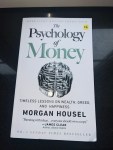
Doing well with money isn’t necessarily about what you know. It’s about how you behave. And behavior is hard to teach, even to really smart people. Money–investing, personal finance, and business decisions–is typically taught as a math-based field, where data and formulas tell us exactly what to do. But in the real world people don’t make financial decisions on a spreadsheet. They make them at the dinner table, or in a meeting room, where personal history, your own unique view of the world, ego, pride, marketing, and odd incentives are scrambled together. In The Psychology of Money, award-winning author Morgan Housel shares 19 short stories exploring the strange ways people think about money and teaches you how to make better sense of one of life’s most important topics.
I need to admit here that this book is one of the better business / finance books I have read so far in my life.
This book gives us a lot of good lessons and tips about how to use our money and not impulse buy stuff we don’t really need. At the same time this book gives us some lessons about investing in stocks, funds and bonds.
I feel like its important for me to mention that this book wont tell you how to become rich overnight because this book focuses more on building wealth the stable and longterm way like saving money from each paycheck or investing some of the money you have today or from each paycheck into stable investments like funds, bonds and companies which have somehow stable growth in their stocks. This book aims more towards using the resources we have today like getting paycheck from our jobs or even switching jobs if our current jobs makes us miserable.
But at the same time this book doesn’t only talk about wealth, it also talks about happiness and that with time our goals and happiness might change which is perfectly fine. And we shouldn’t keep the same goals we had as teenager when we are in our 30s just because we made a decision we are no longer happy with over a decade later.
This book has 20 goals which we can use in our own lives, but those 20 goals we do get in this book are very common sense and easy to do in our day-to-day life if we really put our minds to it. Which really shows how easy and simple approach this book has to actually growing our personal wealth and become “rich” which is very different from person to person.
This book makes a big point that “becoming rich” is very different from person to person. One person might think about being “rich” as having a mansion or multiple Ferraris or Lamborghinis, while the second person might think about being “rich” as owning their own apartment and having a decent car which gets them from point A to point B and didn’t cost much, and a third person might be somewhere in-between person one and person two. So this book makes a pretty big point about defining for ourselves how we define being “rich” as.
I gotta admit that this book is way better than the “Rich dad, Poor Dad” book by Robert Kiyosaki which I have made some negative opinions about after I have reviewed that book a few years ago. But back to the review of this book.
The writing style in this book is very good and easygoing. There author of this book uses simple and everyday language so that we who don’t have a bachelor in economics or finance can understand the things this book talks about and take as much as possible out off this book. Which made me like this book so much better, since over the time I have been writing reviews on this website I have come across some finance / business books which used very advanced languages which only people with bachelor in economics or finance would understand and I don’t have neither, so I have more of a dummy when it comes to terms and advanced concepts in economics and finance.
I Give This Book 5 / 5
 The Book Corner Chronicles