
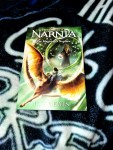
One cold, wet summer in London, Digory and Polly meet and become fast friends. Their lives take a sudden turn when Digory’s Uncle Andrew, who fancies himself a magician, sends them hurtling to… somewhere else. They arrive in Narnia, just as it is born from the song of the great Lion, Aslan. Along the way, they encounter the evil sorceress Jadis, whose dark magic threatens everything. After a whirlwind adventure, they finally find their way back home.
This book is the 6th book in the “The Chronicles of Narnia” series, and I gotta admit that it offers some fascinating glimpse into the origins of Narnia. In my opinion this book is the best book in the whole series because it is providing an intriguing narrative that, while imaginative, occasionally falters in its pacing and character depth.
The story in this book Digory Kirke and Polly Plummer, two children living in London, who stumble upon a magical adventure when they encounter Digory’s uncle, the eccentric and morally ambiguous Uncle Andrew. Using magical rings, Uncle Andrew unwittingly sends the children on a journey to different worlds, including the dying land of Charn and the newly created Narnia.
And once again there is the problem of introduction new main characters into the series which I have comment on extensively in the previews review of the 5th book in this series.
But at the same time Digory Kirke and Polly Plummer are much better characters than the 2 main characters we got in the 5th book in this series, which is a less of an issue for me personally than in book 5. Because I actually liked the two main characters in this book unlike the two main characters in the 5th book
The depiction of these worlds is vivid and enchanting. The transition from the dreary streets of London to the vibrant creation of Narnia is particularly captivating, offering a rich contrast that highlights the wonders of the magical realm. However, the narrative sometimes feels rushed, with certain pivotal moments lacking the depth they deserve.
Digory Kirke serves as the primary protagonist, and his journey is central to the narrative. While his character arc involves themes of temptation, redemption, and growth, the exploration of his internal struggles is somewhat limited. His motivations are clear, but the emotional depth needed to fully engage readers is occasionally lacking.
Polly Plummer, as Digory’s loyal companion, provides balance and support. Her practicality and courage are evident, though her character could benefit from further development. Her relationship with Digory is heartwarming, yet their interactions often skim the surface of deeper emotional connections.
Uncle Andrew, with his misguided ambitions and questionable ethics, adds complexity to the story. His character provides a cautionary tale about the misuse of power, but his motivations and backstory are not fully explored, leaving him as more of a caricature than a fully fleshed-out character.
This book explores themes of creation, temptation, and the consequences of one’s actions. The story’s depiction of the birth of Narnia serves as a powerful allegory for creation and the inherent goodness of the natural world. However, these themes, while present, sometimes lack the nuance and depth seen in other books in the series.
The writing style itself in this book remains engaging and descriptive, capturing the wonder and magic of Narnia’s creation with lyrical prose. The author of this book has in a way the ability to convey the awe of new beginnings is evident in the vivid imagery and rich descriptions. I don’t know if it is a one time thing, or just that he didn’t care to do the same thing in the previous Narnia books but if he had done the same thing in the previous books I would have enjoyed the book series much more than I actually did.
However, the pacing of the narrative is uneven, with some sections feeling rushed and underdeveloped. Key events, such as the creation of Narnia, are beautifully depicted but could benefit from a more measured exploration of their significance.
The dialogue, while often charming, can feel stilted at times, missing opportunities for deeper character interactions. This lack of depth in conversations contributes to a sense of detachment from the characters’ emotional journeys.
I Give This Book 3 / 5

