
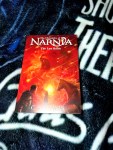
The unicorn says that humans are brought to Narnia when Narnia is stirred and upset. And Narnia is in trouble now: A false Aslan roams the land. Narnia’s only hope is that Eustace and Jill, old friends to Narnia, will be able to find the true Aslan and restore peace to the land. Their task is a difficult one because, as the Centaur says, “The stars never lie, but Men and Beasts do.” Who is the real Aslan and who is the imposter?
This book is the 7th and final book in “The Chronicles of Narnia” series. And I gotta admit that it is one of the better books in this series because it presents a climactic and thought-provoking conclusion to the series which I wont be recommending to anyone because of how much I disliked it. At the same time this book is offering a narrative that is both ambitious and controversial, which has left me personally with mixed emotions about the series’ resolution. But as always I will explain everything in this review, if you are interested in hearing my thoughts about this book then keep reading this review.
The story in this book unfolds with a false Aslan appearing in Narnia, manipulated by the ape Shift and his unwitting accomplice, Puzzle the donkey. As confusion and chaos spread, King Tirian, the last king of Narnia, struggles to rally the Narnians against the impostor and the invading Calormenes. The Pevensie siblings and other familiar characters return to aid in the final stand.
The depiction of Narnia remains vivid, capturing the beauty and magic of the land even amidst its darkest hour. The setting serves as a poignant backdrop for the unfolding drama, highlighting the stakes and urgency of the battle for Narnia’s soul.
I gotta say that this final book has entirely too man characters in this book. Because we get all of the main characters from the previous books in this series squeezed into this short book which is roughly 290 pages long.
King Tirian emerges as a central character, embodying courage and integrity in the face of overwhelming odds. His leadership and unwavering faith are commendable, though his character development feels somewhat constrained by the rapid pace of events. While Tirian’s resolve is admirable, deeper exploration of his internal struggles would have added richness to his journey.
The return of familiar characters, including the Pevensie siblings, evokes nostalgia and provides continuity. However, their roles are limited, with less focus on their individual growth and more emphasis on their collective contribution to the battle. This lack of character depth can leave readers longing for more personal insights.
Shift and Puzzle serve as symbols of manipulation and innocence, respectively. While Shift’s cunning and deceit are clear, his motivations lack complexity. Puzzle’s naivety provides a counterbalance, though his arc remains underdeveloped.
At the same time this book explores themes of faith, deception, and redemption. The false Aslan serves as a powerful allegory for the dangers of false prophets and misplaced faith. The story underscores the importance of discernment and the courage to stand for truth, even when faced with deception.
The end of Narnia serves as a metaphor for the end of an era, exploring themes of renewal and the promise of a better world. The allegorical nature of this conclusion invites reflection on mortality and the hope of salvation, though its abruptness may leave readers feeling unsatisfied. I did appreciate the metaphor for the end of an era, because I really plan to exist the era of bad books for the rest of the year hopefully of course.
The writing itself in this book retains its descriptive and imaginative quality, vividly capturing the tension and emotion of Narnia’s final days. His use of language is evocative, painting a picture of a world on the brink of transformation.
However, the pacing of the narrative is uneven, with rapid shifts between events that can feel disorienting. The swift progression of the plot leaves little room for character introspection, affecting the overall emotional impact. This hurried pace may detract from the gravity of the story’s themes, which has left me personally with a sense of incompleteness.
I Give This Book 3 / 5

