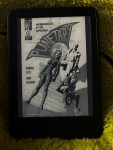
“Planetary #1: Archaeologists of The Impossible” By Warren Ellis & John Cassaday Review

Jakita Wagner recruits a mysterious 100-year-old man named Elijah Snow to join the Planetary group–archaeologists of the unknown. Their first mission: locate the mysterious Doc Brass!

This comic book is a groundbreaking debut that seamlessly marries mystery, adventure, and the supernatural. This comic book is delivering a compelling narrative enriched by stunning visuals.

The creators of this comic book creates a story that immediately captivates, introducing readers to the enigmatic world of Planetary, an organization dedicated to uncovering the hidden wonders of the world. The narrative centers around Elijah Snow, a new recruit with a mysterious past, as he joins the team on a mission to explore a secret history of the 20th century. The writing itself in this comic book is sharp and intelligent, weaving together elements of pulp fiction, science fiction, and conspiracy theories into a cohesive and intriguing plot.

The characters in this comic book are richly developed, each with their unique quirks and motivations. Elijah Snow, with his icy demeanor and unyielding curiosity, serves as a fascinating protagonist who draws readers into the mystery. His interactions with the team, particularly with the charismatic Jakita Wagner and the tech-savvy Drummer, add depth and dimension to the story. The creators of this comic book masterfully balances character development with plot progression, ensuring that I personally were equally invested in the characters and the overarching narrative.

The artwork itself in this comic book is nothing short of spectacular. The clean lines and detailed illustrations bring this comic book’s imaginative world to life, capturing both the grandeur and intricacies of the story’s settings. In a way the artwork in this comic book has the ability to convey emotion and tension through his art enhances the narrative, creating an immersive experience that pulled me personally into the heart of the action.

One of the strengths of this comic book is its ability to appeal to a wide audience. Whether you’re a fan of science fiction, mystery, or adventure, this comic book offers something for everyone. The blend of genres creates a narrative that is both familiar and fresh, inviting us as readers to explore a world where the impossible becomes possible.

The pacing in this comic book is expertly managed, balancing high-stakes action with moments of introspection and discovery. The narrative structure in this comic book has kept me personally engaged, gradually revealing secrets and mysteries that promise further exploration in future comic books in this series

I Give This Book 5 / 5

“Bloodshot Reborn #1” By Jeff Lemire & Mico Suayan Review

Bloodshot’s nanites made him a nearly unstoppable killing machine. His enhanced strength, speed, endurance, and healing made him the perfect weapon, and he served his masters at Project Rising Spirit – a private contractor trafficking in violence – very well.

This comic book attempts to delve deep into the psyche of its titular character, exploring themes of identity and redemption. However, despite its intriguing premise and stunning artwork, this comic book does struggle a lot with uneven pacing and lack of character depth.

Jeff Lemire, known for his character-driven narratives, is introduces us as readers to a Bloodshot who is struggling with the aftermath of his violent past. Now living under the alias Ray Garrison, he grapples with guilt and a sense of purposelessness. While the concept of a former super-soldier seeking redemption is compelling, the execution leaves much to be desired. The narrative often feels disjointed, with key plot points introduced abruptly, which has left me personally struggling to connect emotionally with Ray’s journey.

This comic book attempts to explore Ray’s internal conflict through a series of flashbacks and hallucinations. However, these elements are not seamlessly integrated into the narrative, making the story feel fragmented. The lack of a clear, cohesive storyline detracts from the emotional impact and makes it difficult for me personally to fully engage with Ray’s transformation.

The artwork itself in this comic book is a standout feature of this comic book, because it is elevating the overall experience with its detailed and realistic illustrations. The artwork in this comic book captures the gritty atmosphere of Ray’s world, effectively conveying the character’s turmoil and isolation. The action sequences are dynamic and well-executed, showcasing this comic book’s talent for capturing movement and intensity.

Despite the strong visual elements, this comic book struggles to deliver a compelling narrative. This comic book’s pacing is uneven, with moments of introspection overshadowed by disjointed action. This imbalance prevents the story from fully exploring the complex themes of redemption and identity that lie at its core.

While the groundwork for an interesting character study is present, the issue falls short in its execution. Ray’s struggle for redemption feels superficial due to the lack of nuanced character development. We as readers are given glimpses of his inner turmoil, but these moments are not expanded upon enough to create a resonant emotional connection.

I Give This Book 2 / 5

“Aphrodite IX #1: FCBD 2013” By Matt Hawkins & Stjepan Šejić Review

Aphrodite IX returns for Free Comic Book Day! This first free issue launches a new ongoing series of Top Cow’s fan favorite, memory challenged, green haired, questionably human heroine. Hundreds of years after a cataclysmic event scorched the surface, Earth and its inhabitants have been forever altered and a new landscape and political struggle has taken hold with three distinct factions fighting for control. Aphrodite IX is both anachronism and advanced technology in a world that she no longer recognizes. No aliens, just humans and their genetically and technologically altered descendants in a mixture of the best Sci-Fi and Fantasy has to offer!

This comic book is an exhilarating dive into a world where advanced technology and raw survival instincts collide. At the same time this comic book offers a compelling introduction that blends stunning visuals with an engaging narrative.

The story in this comic book, is set in a post-apocalyptic future, follows Aphrodite IX, a genetically engineered assassin caught between warring factions. The creators of this comic book creates a narrative that is both thrilling and thought-provoking, exploring themes of identity, free will, and the consequences of technological advancement. The writing itself in this comic book is sharp and concise, quickly immersing readers in a world filled with tension and intrigue.

Aphrodite IX is a captivating protagonist, struggling with her fragmented memories and the nature of her existence. The creators of this comic book effectively develops her character, making her both formidable and relatable. Her journey of self-discovery is compelling, driving the narrative forward and inviting readers to ponder questions about autonomy and humanity.

The artwork itself in this comic book is nothing short of breathtaking. The illustrations that we get in this comic book bring the futuristic world to life with vivid detail and dynamic energy. The character designs are visually striking, capturing the essence of the technologically enhanced beings that populate this world. The artwork in this comic book excels in creating atmospheric settings, from the bustling cityscapes to the desolate wastelands, each rendered with meticulous care.

The synergy between the creators of this comic book results in a cohesive and immersive reading experience. Each page is crafted with precision, ensuring that the visual and narrative elements work in harmony to draw me personally into the story. The pacing is expertly managed, balancing high-stakes action with moments of introspection and character development.

One of the strengths of this cocoa book is its accessibility. While it builds upon established lore, the issue serves as an excellent entry point for new readers. The creators of this comic book provides enough context to understand the world and its conflicts without overwhelming those unfamiliar with the series. This balance of familiarity and innovation ensures that both longtime fans and newcomers will find something to enjoy.

I Give This Book 5 / 5

“Gideon Falls #1” By Jeff Lemire & Andrea Sorrentino & Jock Review

A brand-new ongoing series from the acclaimed bestselling creative team of Old Man Logan and Green Arrow! The lives of a reclusive young man obsessed with a conspiracy in the city’s trash, and a washed-up Catholic priest arriving in a small town full of dark secrets, become intertwined around the mysterious legend of The Black Barn, an otherworldly building that is alleged to have appeared in both the city and the small town, throughout history, bringing death and madness in its wake. Rural mystery and urban horror collide in this character-driven meditation on obsession, mental illness, and faith.

This comic book attempts to weave a tale of mystery and psychological horror but ultimately falls short in delivering a cohesive and engaging narrative. At the same time this comic book struggles with pacing and clarity, leaving readers intrigued but unsatisfied.

The narrative in this comic book introduces two seemingly separate storylines: a reclusive man obsessed with finding hidden fragments in the city’s trash and a washed-up Catholic priest who arrives in a small town with dark secrets. While the premise is undeniably intriguing, the execution lacks the clarity needed to draw me personally in fully. The narrative jumps between these plots, creating a sense of disorientation that undermines the story’s potential impact.

The characters in this comic book, though promising, are not given enough development to make them relatable or engaging. Norton, the man plagued by paranoia, is portrayed with an air of mystery, but his motivations remain largely unexplored. Similarly, Father Fred’s arrival in the eerie town of Gideon Falls hints at a deeper backstory, yet his character lacks the depth and nuance needed to capture my investment in this comic book.

The artwork itself in this comic book is a standout feature of this comic book, because it is bringing a haunting and atmospheric quality to the comic. The use of shadow and intricate linework effectively conveys the unsettling mood of the story. The panel layouts are dynamic and creative, adding a visual tension that complements the narrative’s eerie tone. However, the complexity of the visuals can sometimes contribute to this comic book’s overall sense of confusion, making it challenging to follow the story’s progression.

Despite its narrative challenges, this comic book lays the groundwork for a potentially intriguing series. The themes of madness, faith, and the unknown are rich with possibility, offering numerous avenues for exploration in future comic book in this series. With more focused storytelling and character development, the series could evolve into a compelling psychological thriller.

I Give This Book 2 / 5

“Battlestar Galactica #0” By Greg Pak & Nigel Raynor Review

The wait is over! The new adventures of the crew of the Battlestar Galactica begin here with Dynamite Entertainment, writer Greg Pak, and artist Nigel Raynor! D.E. proudly presents their all-new Galactica series, Making its debut with this special #0 issue featuring an original story – with a “dynamite cliffhanger” ending – that leads into the ongoing series! Pak is an exclusive writer for Marvel Comics, but has carved out this series for D.E. and he’s turning out a comic that fans both new and old are going to love. And we’re so sure they’re going to love it, that this introductory issue is available for just one thin quarter! And what would this issue be without a red-hot Photo cover featuring the beautiful Cylon, “Number Six!” A Special preview of Brett Matthews and John Cassaday’s Lone Ranger comic book series from D.E.! Featuring an art cover by Steve (Civil War) McNiven, shipped in a 50/50 ratio with the photo cover version. Future covers by Michael Turner, Billy Tan, and other high-profile artists to be announced!

This comic book attempts to capture the essence of the beloved sci-fi series, aiming to draw us as readers into the intense conflict between humans and Cylons. However, despite its potential. But at the same time this comic book struggles with uneven storytelling and character engagement.

The narrative in this comic book narrative seeks to expand the universe of “Battlestar Galactica,” yet the plot feels rushed and lacks the depth needed to fully immerse me personally. The story jumps quickly into action without adequately setting the stage or providing context for new readers as myself to this series. This rapid pacing leaves little room for character development, making it challenging for both newcomers and fans to connect with the story.

The characters in this comic book, central to the original series’ appeal, are introduced with minimal backstory or motivation. While familiar faces appear, their interactions feel superficial, lacking the complexity and nuance that made them compelling on screen. This comic book’s portrayal of the characters fails to capture the tension and camaraderie that defined their relationships in the series.

The artwork itself in this comic book is serviceable but struggles to elevate the narrative. The illustrations that we get in this comic book capture the essence of the Battlestar Galactica universe, depicting ships and space battles with detail. However, the character designs are less consistent, occasionally lacking the expressiveness needed to convey emotion and intensity. This inconsistency in the artwork further detracts from the overall impact of the story.

One of the main challenges with comic book is its inability to balance action with story development. This comic book prioritizes quick action sequences over meaningful plot progression or character exploration. As a result, the stakes feel less significant, and the emotional weight of the story is diminished.

Despite these shortcomings, the core concept behind this comic book holds promise. The rich lore of “Battlestar Galactica” provides ample opportunity for engaging storytelling, exploring themes of survival, identity, and morality. With more focus on character depth and narrative cohesion, future comic books in this series could potentially capture the spirit of the original series and offer a compelling expansion of its universe.

I Give This Book 2 / 5

“Descender #1” By Jeff Lemire & Dustin Nguyen Review

A rip-roaring and heart-felt cosmic odyssey that pits humanity against machine, and world against world, to create a sprawling space opera from the creators of Trillium, Sweet Tooth, and Little Gotham.

This comic book embarks on a science fiction journey with a visually captivating universe. However, despite its promising concept and stunning artwork but at the same time this comic book struggles with lack of depth in storytelling and character engagement.

Jeff Lemire, known for his ability to create rich, emotional narratives, introduces readers to a future where humanity is grappling with the aftermath of a catastrophic event. Giant robots, known as Harvesters, have decimated worlds, and the story follows TIM-21, a companion android who may hold the key to understanding these mysterious machines. While the premise is intriguing, the execution falls flat, with the narrative struggling to establish a strong connection with me personally in this comic book. 

The pacing of this comic book is one of the primary issues this comic book faces in my opinion. The story rushes through key plot points, leaving little room for character development or emotional resonance. TIM-21, who serves as the central character, lacks the depth necessary to make him relatable or compelling. The absence of a strong emotional core makes it difficult for me personally to invest in his journey or the broader implications of the plot.

The world-building aspect of this comic book, though conceptually interesting, is not fully realized in this debut issue. The setting feels underdeveloped, with scant details provided about the universe’s history or the societal impact of the Harvesters. This lack of context has left me personally with more questions than answers, hindering immersion and understanding.

The artwork itself in this comic book is a standout feature of this comic book. The illustrations that we get in this comic book bring a unique and ethereal quality to the comic, capturing the vastness and mystery of space. The character designs we get in this comic book are expressive, and his ability to convey emotion through subtle visual cues adds a layer of depth that the narrative lacks.

Despite the artistic strengths, this comic book’s of narrative cohesion and character focus undermines its overall impact. The story feels more like a prologue than a fully developed introduction, which has left me personally without a compelling reason to continue the series. The potential for exploring themes of identity, humanity, and survival is present but remains untapped in this initial installment.

I Give This Book 1 / 5

“Oblivion Song #1” By Robert Kirkman & Lorenzo De Felici & Annalisa Leoni Review

A decade ago, 300,000 citizens of Philadelphia were suddenly lost in Oblivion. The government made every attempt to recover them, but after many years, they gave up. Nathan Cole…won’t. He makes daily trips, risking his life to try and rescue those still living in the apocalyptic hellscape of Oblivion. But maybe…Nathan is looking for something else? Why can’t he resist the siren call of the Oblivion Song?

This comic book introduces us as readers to a world where a catastrophic event has blurred the lines between dimensions. While the narrative holds intriguing potential, the execution in this comic book is struggling a lot with its pacing and character development.

Robert Kirkman, known for his work on “The Walking Dead,” sets up an ambitious premise. Ten years ago, 300,000 people in Philadelphia vanished into an alternate dimension known as Oblivion. The story follows Nathan Cole, a determined protagonist dedicated to rescuing those left behind. Kirkman’s concept is original and compelling, blending science fiction with elements of mystery and adventure. However, the comic book falters in my opinion in its delivery, with a narrative that feels rushed and lacking in depth.

The pacing is one of the primary challenges of this comic book. The story rapidly introduces us as readers to this complex world without providing enough context or background. While the action sequences are dynamic, they often overshadow crucial aspects of world-building and character exploration. As a result, I personally found it difficult to fully grasp the intricacies of the plot or the stakes involved.

Nathan Cole, the central character, is portrayed with a singular focus on his mission, yet his motivations and backstory remain underdeveloped. This lack of depth makes it challenging to connect with him on an emotional level. While his dedication is clear, understanding what drives him beyond the surface level is crucial for my personality investment in this comic book, and this comic book falls short in that regard.

The artwork itself in this comic book is a standout feature of this comic book. The illustrations that we get in this comic book vividly capture the eerie and otherworldly nature of Oblivion. The landscapes are imaginative and visually striking, effectively conveying the sense of danger and mystery that defines this alternate dimension. The character designs we get in this comic book are expressive, adding a layer of intensity to the action scenes.

Despite its shortcomings, this comic book lays the groundwork for potentially rich storytelling. The concept of alternate dimensions and the exploration of loss and perseverance offer numerous avenues for narrative depth. With more focused character development and clearer pacing, future comic books in this series could delve deeper into the emotional and thematic elements hinted at in this debut.

I Give This Book 2 / 5

“Trese #1: FCBD” By Budjette Tan & Kajo Baldisimo Review

Award-winning comic and soon to be Netflix anime series! When dusk arrives in the city of Manila, that’s when you become the most likely prey of the underworld. Kidnappers and thieves will be the least of your worries. Beware the criminals that can’t be bound with handcuffs nor harmed with bullets. Beware the ones that crave for your blood, those who hold your heart ransom, and the ones that come to steal your soul. When crime takes a turn for the weird, the police call Alexandra Trese. The TRESE FCBD book features a preview from TRESE Vol 2: Unreported Murders, a section on the forthcoming Netflix TRESE anime series launching this summer (including an interview with Director Jay Oliva), bonus pages with w/ background about the monsters of Philippine myth, as told by TRESE creators Budjette Tan and Kajo Baldisimo, and a teaser on TRESE Vol 3: Mass Murders, coming this Sept from ABLAZE!

This comic book introduces us as readers to a world where Filipino folklore and urban fantasy collide. Despite its intriguing premise, this comic book falls short of delivering a captivating experience. While this comic book had potential for a rich narrative is present, the execution lacks the depth and clarity needed to engage me personally.

The narrative we get in this comic book centers around the protagonist, Alexandra Trese, a detective who deals with supernatural cases in Manila. The concept of blending local mythology with modern detective work is fresh and promising. However, this comic book struggles with pacing and structure, presenting a disjointed storyline that can be difficult to follow. Key plot points are introduced abruptly, which has left me personally with little context or understanding of the world and its rules.

The character development in this comic book is another area where this comic book falters in my opinion. Alexandra Trese, while initially intriguing, lacks depth and relatability. Her motivations and backstory are only superficially addressed, making it challenging for me personally to connect with her journey. Supporting characters are similarly underdeveloped, serving more as plot devices than fully realized individuals.

The artwork itself in this comic book, while stylistically distinct, does not fully compensate for the narrative shortcomings. The black-and-white illustrations aim to capture the gritty atmosphere of Manila’s supernatural underworld. Although the artwork is detailed and occasionally striking, the overall visual storytelling lacks consistency. Some panels are cluttered, which can obscure the action and make it difficult to discern what is happening.

Despite these issues, the core idea behind this comic book significant potential. The integration of Filipino folklore into a modern urban setting is a unique approach that could offer rich storytelling opportunities. With better pacing, more detailed world-building, and deeper character exploration, future comic book could potentially deliver on this promise.

One of the key challenges with this comic book is its role as an introductory issue. As a Free Comic Book Day edition, it aims to entice new readers but unfortunately falls short in providing a clear and engaging entry point into the series. The lack of context and coherent narrative flow has left me personally as a new reader to this series confused rather than intrigued.

I Give This Book 1 / 5

“The Marked #1” By David Hine & Brian Haberlin & Geirrod Van Dyke Review

DOUBLE-SIZED FOR SINGLE PRICE! THEIR MAGIC IS CHANNELED THROUGH THEIR TATTOOS! The Marked may look like cool young influencers, but beneath the designer clothes, their bodies are tattooed with the magical glyphs of an ancient order that secretly protects the world against evil forces. With no new occult threats, The Marked use their tattooed powers solely for the pursuit of pleasure until a young woman called Liza creates a dangerous new form of Hybrid Sorcery. The party is over for The Marked. You’ll believe in magic—terrifying, soul-destroying magic.

This comic book embarks on a journey into a world where magic and tattoos intertwine. Unfortunately, this comic book falls short of its intriguing premise. Despite the potential this comic book had, the story struggles with execution and fails to deliver a captivating introduction.

The narrative in this comic book introduces a secret society called The Marked, whose members use magical tattoos to protect the world from dark forces. While the concept is promising, the storytelling feels disjointed and lacks depth. The plot attempts to weave together themes of magic, power, and secrecy, but it often gets bogged down in exposition without offering meaningful character development or engaging dialogue.

The characters in this comic book are introduced rapidly, making it difficult to connect with them or understand their motivations. While there’s an attempt to establish a diverse cast, their personalities and backstories remain superficial. This lack of character depth leaves readers with little reason to invest in their journeys or care about their fates.

The artwork itself in this comic book, while technically proficient, struggles to bring the narrative to life. The illustrations are detailed, particularly in the depiction of the intricate tattoos that are central to the story. However, the overall visual storytelling feels static, lacking the dynamic energy needed to complement a tale about magic and adventure. The panel layouts are often cluttered, detracting from the clarity of the action and contributing to the disjointed feel of the narrative.

One of the main issues I had with this comic book is its pacing. The story rushes through key plot points without allowing sufficient time for the world-building or character development necessary to fully immerse myself in the story. Instead of gradually unveiling the mysteries of the magical society, the narrative relies heavily on exposition, which can feel overwhelming and disengaging.

Despite these shortcomings, the concept behind this comic book holds potential. The idea of using tattoos as a source of magical power is intriguing and could serve as a foundation for a compelling series if developed with more care and attention to detail. With stronger character arcs and a more coherent narrative structure, future comic books in this series might better explore the unique aspects of this world.

I Give This Book 1 / 5

“Die #1” By Kieron Gillen & Stephanie Hans & Jamie McKelvie Review

THE WICKED + THE DIVINE writer KIERON GILLEN teams up with artist supernova STEPHANIE HANS (THE WICKED + THE DIVINE 1831, Journey Into Mystery) for her first ongoing comic! DIE is a pitch-black fantasy where a group of forty-something adults have to deal with the returning unearthly horror they barely survived as teenage role-players. If Kieron’s in a rush, he describes it as “Goth Jumanji.” That only captures a sliver of what you’ll find in oversized debut issue—where fantasy gets all too real.

This comic book introduces us as readers to a compelling and dark fantasy world where role-playing games become dangerously real. At the same time this comic book presents a fascinating premise that captures the imagination, though it occasionally struggles with pacing and depth.

The narrative in this comic book begins with a group of teenagers who, in 1991, are mysteriously transported into a fantastical world through a role-playing game. The story then jumps to the present, where the now-adult characters are drawn back into the game’s dark realm. The writing itself in this comic book is atmospheric and layered, exploring themes of escapism, nostalgia, and the consequences of past actions.

The premise of this comic book is pretty intriguing, offering a unique twist on the concept of role-playing games. The idea of a game world that becomes real and the impact it has on its players is a fresh take, inviting us as readers to ponder the boundaries between fantasy and reality. However, while the setup is engaging, this comic book sometimes feels rushed, particularly in its transition between past and present. This can make it challenging for me personally to fully connect with the characters and their shared history.

The characters themselves are diverse, each bringing their own baggage and complexities to the story. The creators of this comic book hints at their individual struggles and the ways the game has affected them, but the limited space in this first comic book leaves some of these aspects underexplored. As a result, while the characters are intriguing, they lack the depth needed to fully engage me personally from the outset.

The artwork itself in this comic book is a highlight of this comic book, because it is creating a visually stunning and atmospheric experience. The artwork in this comic book has a rich and moody vibe to it that reflect the dark and mysterious nature of the story. In a way the artwork in this comic book has the ability to convey emotion and tension through her art enhances the narrative, which had drawn me personally into the eerie and fantastical world of “Die.”

The character designs we get in this comic book are distinctive and memorable, capturing the essence of each character both in the real world and within the game. The combination of the atmospheric backgrounds and character work results in a visually cohesive and striking comic.

Despite its strengths, this comic book occasionally struggles with pacing. The rapid shifts between timelines and the introduction of numerous characters and concepts can feel overwhelming, which has left me personally with more questions than answers. This can hinder full immersion into the story, though it also sets the stage for deeper exploration in future comic books in this series.

I Give This Book 3 / 5